

Graphite extrusion pelletization process

The graphite extrusion pelletization process is a method used to produce graphite pellets through extrusion. It involves the following steps:
1. Preparation of Graphite Mixture: The process starts with the preparation of a graphite mixture. Graphite powder is typically mixed with binders and other additives to achieve the desired properties and characteristics of the pellets.
2. Mixing: The graphite powder and binders are thoroughly mixed together to ensure a uniform distribution of the components. This step can be carried out using high-shear mixers or other mixing equipment.
3. Extrusion: The mixed graphite material is then fed into an extrusion machine, also known as an extruder. The extruder consists of a barrel with a screw inside. As the material is pushed through the barrel, the screw applies pressure, forcing the material through a die at the end of the extruder.
4. Die Design: The die used in the extrusion process determines the shape and size of the graphite pellets. It is designed to provide the desired dimensions and characteristics required for the specific application.
5. Pellet Formation: As the graphite mixture passes through the die, it undergoes plastic deformation and takes the shape of the die opening. The extruded material emerges as a continuous strand or rod.
6. Cutting: The continuous strand of extruded graphite is then cut into individual pellets of the desired length using cutting mechanisms such as knives or blades. The cutting can be done while the extruded material is still soft or after it has hardened, depending on the specific requirements.
7. Drying and Curing: The newly formed graphite pellets may need to undergo a drying and curing process to remove any moisture or solvents present in the binder and to enhance their strength and stability. This step is typically carried out in ovens or drying chambers.
8. Quality Control: Throughout the process, quality control measures are implemented to ensure that the graphite pellets meet the required specifications in terms of size, shape, density, and other properties.
The graphite extrusion pelletization process enables the production of uniform and well-defined graphite pellets that can be used in various applications, including electrodes, lubricants, and thermal management systems.
Related products
-
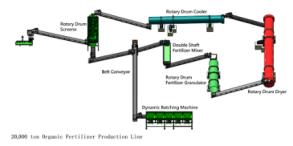
Organic fertilizer production equipment with an...
Organic fertilizer production equipment with an annual output of 20,000 tons typically consists of the following basic equipment: 1.Composting Equipment: This equipment is used to ferment organic materials and convert them into high-quality organic fertilizers. Composting equipment can include a compost turner, a crushing machine, and a mixing machine. 2.Fermentation Equipment: This equipment is used to create optimal conditions for the microorganisms to break down the organic materials in th...
-
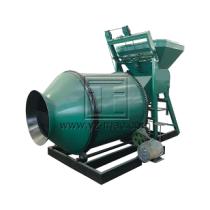
Fertilizer equipment
Fertilizer equipment refers to various types of machinery and equipment used in the production of fertilizers. This can include equipment used in the processes of fermentation, granulation, crushing, mixing, drying, cooling, coating, screening, and conveying. Fertilizer equipment can be designed for use with a variety of fertilizers, including organic fertilizers, compound fertilizers, and livestock manure fertilizers. Some common examples of fertilizer equipment include: 1.Fermentation equip...
-

Graphite granulation production line
A graphite granulation production line refers to a complete set of equipment and processes designed for the production of graphite granules. It involves the transformation of graphite powder or a graphite mixture into granular form through various techniques and steps. The production line typically includes the following components: 1. Graphite Mixing: The process begins with the mixing of graphite powder with binders or other additives. This step ensures homogeneity and uniform distribution ...
-

Horizontal mixing equipment
Horizontal mixing equipment is a type of fertilizer mixing equipment that is used to mix various types of fertilizers and other materials. The equipment consists of a horizontal mixing chamber with one or more mixing shafts that rotate at a high speed, creating a shearing and blending action. The materials are fed into the mixing chamber, where they are mixed and blended uniformly. The horizontal mixing equipment is suitable for mixing a variety of materials, including powders, granules, and ...
-
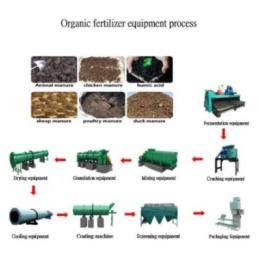
Organic fertilizer processing flow
The organic fertilizer processing flow typically includes the following steps: 1.Collection of raw materials: Collecting raw materials such as animal manure, crop residues, and organic waste materials. 2.Pre-treatment of raw materials: Pre-treatment includes removing impurities, grinding and mixing to obtain uniform particle size and moisture content. 3.Fermentation: Fermenting the pre-treated materials in an organic fertilizer composting turner to allow microorganisms to decompose and conver...
-
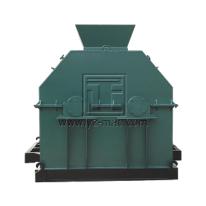
Livestock manure crushing equipment
Livestock manure crushing equipment is used to crush raw livestock manure into smaller particles or powders. This equipment is typically used as a pre-processing step before further processing, such as composting or pelletizing, to make the manure easier to handle and process. The main types of livestock manure crushing equipment include: 1.Hammer mill: This equipment is used to grind and crush the manure into small particles or powders using a rotating hammer or blade. 2.Cage crusher: The ca...