

Fertilizer granulators
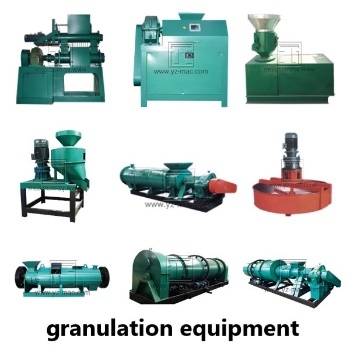
Fertilizer granulators are essential machines in the fertilizer production process that convert raw materials into granular forms. These granulators play a crucial role in improving nutrient management by transforming fertilizers into more convenient, efficient, and controlled-release forms.
Benefits of Fertilizer Granulators:
Improved Nutrient Release: Fertilizer granulators enable the controlled release of nutrients over time. The granular form helps regulate the rate at which nutrients are released into the soil, ensuring that plants receive a consistent and balanced supply of essential elements for optimal growth.
Reduced Nutrient Loss: Granulated fertilizers have lower susceptibility to nutrient loss through leaching, volatilization, or runoff compared to non-granulated forms. The granules provide better retention and absorption by the soil, minimizing environmental impact and maximizing nutrient efficiency.
Ease of Handling and Application: Fertilizer granules are easier to handle, store, transport, and apply compared to powdered or liquid forms. The granular structure provides improved flowability, reduces dustiness, and allows for precise spreading and uniform distribution, ensuring efficient nutrient delivery.
Customization and Formulation: Fertilizer granulators offer flexibility in customizing fertilizer formulations to meet specific crop and soil requirements. Different granulator types allow for the incorporation of additional components, such as micronutrients or organic matter, into the granules, enabling tailored nutrient profiles for optimal plant nutrition.
Types of Fertilizer Granulators:
Rotary Drum Granulator: This type of granulator utilizes a rotating drum to create granules through a combination of rolling, tumbling, and agglomeration processes. It is suitable for a wide range of raw materials and produces uniform, round granules.
Disc Granulator: Disc granulators feature a rotating disc that generates centrifugal force, causing the material to adhere and form granules. They are commonly used for granulating materials with higher moisture content and produce spherical granules.
Pan Granulator: Pan granulators consist of a shallow, rotating pan with high edges. The material is fed into the pan and agglomerates into granules through a combination of spraying, tumbling, and rolling actions. Pan granulators are suitable for a variety of materials and produce uniform, high-quality granules.
Drum Granulator: Drum granulators utilize a cylindrical drum to agglomerate the material into granules. The drum rotates while an internal mechanism sprays a binder or liquid onto the material, resulting in granule formation.
Applications of Fertilizer Granulators:
Agriculture and Crop Production: Fertilizer granulators are widely used in agriculture to produce granular fertilizers tailored to specific crop nutrient requirements. The controlled-release properties of granular fertilizers provide a steady supply of nutrients, minimizing the risk of nutrient imbalances and maximizing crop yields.
Horticulture and Landscaping: Granulated fertilizers are commonly used in horticultural practices, including greenhouse cultivation, nurseries, and landscape management. The ease of handling, precise application, and controlled-release characteristics of granular fertilizers support healthy plant growth and promote sustainable landscape management.
Organic Fertilizer Production: Fertilizer granulators play a vital role in the production of organic fertilizers, allowing the conversion of organic materials into granules. This facilitates the utilization of organic waste streams, improves nutrient availability, and promotes environmentally friendly agricultural practices.
Custom Blends and Specialty Fertilizers: Fertilizer granulators enable the production of custom blends and specialty fertilizers by incorporating additional components into the granules. This versatility allows for the creation of tailored nutrient profiles, micronutrient-enriched granules, or specific formulations to address unique soil and crop requirements.
Fertilizer granulators are key tools in enhancing nutrient management and promoting sustainable agricultural practices. These machines provide numerous benefits, including improved nutrient release, reduced nutrient loss, ease of handling, and customization options. With various types of granulators available, such as rotary drum, disc, pan, and drum granulators, there are options to suit different raw materials and production requirements.
Related products
-
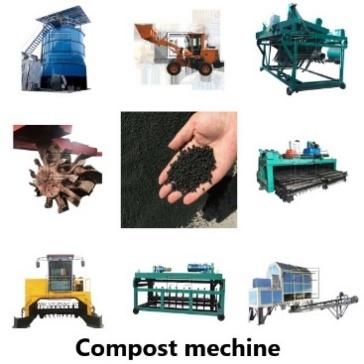
Ompost making machine price
The price of a compost making machine can vary depending on several factors, including the type of machine, capacity, features, brand, and supplier. Large-scale Compost making machines designed for large-scale commercial operations or have higher capacities and advanced features. These machines are more robust and can handle significant volumes of organic waste. Prices for large-scale compost making machines can vary significantly depending on the size, specifications, and brand. They can ra...
-
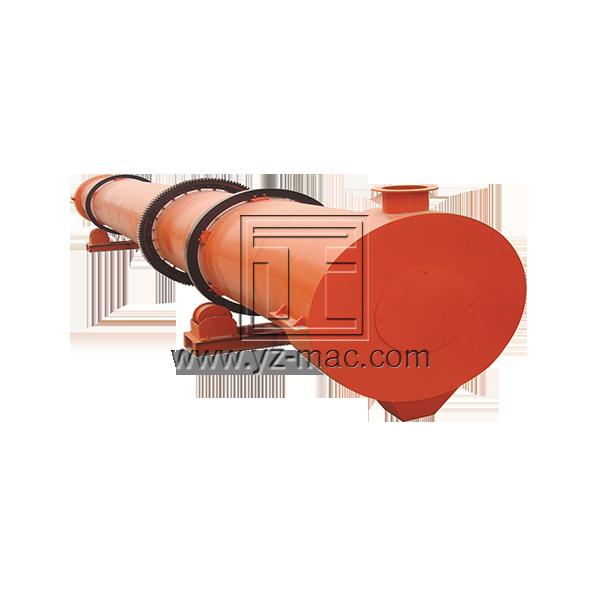
Organic fertilizer drying equipment
Organic fertilizer drying equipment refers to machines used for drying organic fertilizers after the fermentation process. This is an important step in the production of organic fertilizers because moisture content affects the quality and shelf life of the finished product. Some examples of organic fertilizer drying equipment include: Rotary drum dryer: This machine uses hot air to dry organic fertilizers. The drum rotates, which helps to evenly distribute the fertilizer as it dries. Belt dry...
-
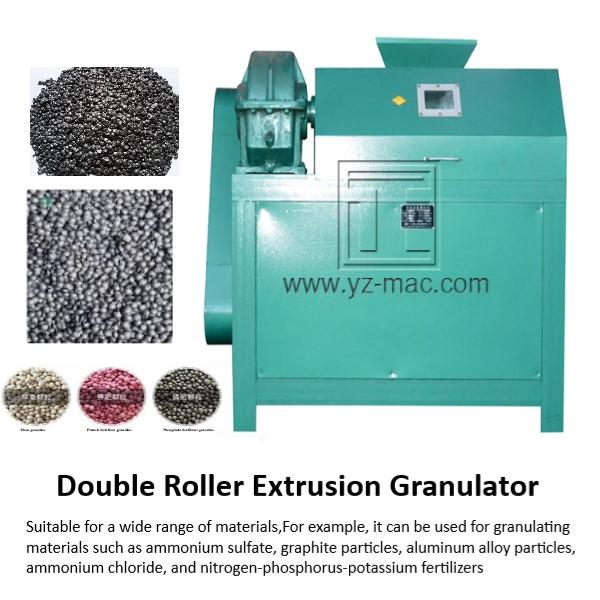
Graphite pellet extrusion system
A graphite pellet extrusion system is a specialized setup or equipment used for the extrusion of graphite pellets. It typically consists of various components and machinery that work together to form graphite pellets of a specific size and shape. Here are some key elements commonly found in a graphite pellet extrusion system: 1. Extruder: The extruder is the core component of the system. It includes a screw or ram mechanism that applies pressure to the graphite material, forcing it through a ...
-
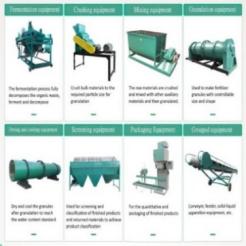
Choose organic fertilizer production equipment
Before purchasing organic fertilizer equipment, we need to understand the production process of organic fertilizer. The general production process is: Raw material batching, mixing and stirring, raw material fermentation, agglomeration and crushing, material granulation, granule drying, granule cooling, granule screening, finished granule coating, finished granule quantitative packaging, etc. Introduction of main equipment of organic fertilizer production line: 1. Fermentation equipment: trou...
-
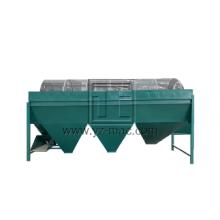
Fertilizer Screening Machine
A fertilizer screening machine is a type of industrial equipment that is used to separate and classify solid materials based on particle size. The machine works by passing the material through a series of screens or sieves with different sized openings. The smaller particles pass through the screens, while the larger particles are retained on the screens. Fertilizer screening machines are commonly used in the fertilizer manufacturing industry to separate and classify fertilizers based on part...
-
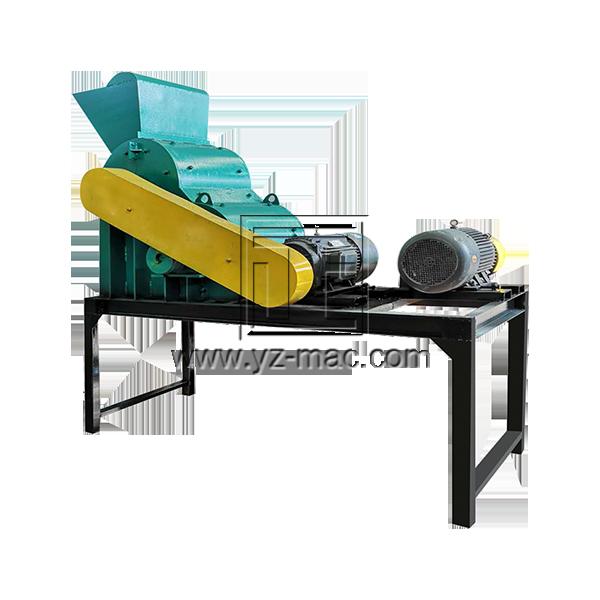
Organic fertilizer grinder
An organic fertilizer grinder is a machine that is used to grind and shred organic materials into smaller particles. This equipment is commonly used in the production of organic fertilizers to break down raw materials such as crop residues, animal manure, and food waste into smaller particles that are easier to handle and mix with other ingredients. The grinder can be used to prepare materials for composting or for further processing in other machines such as mixers, granulators, and pelletiz...