

Compound fertilizer production line
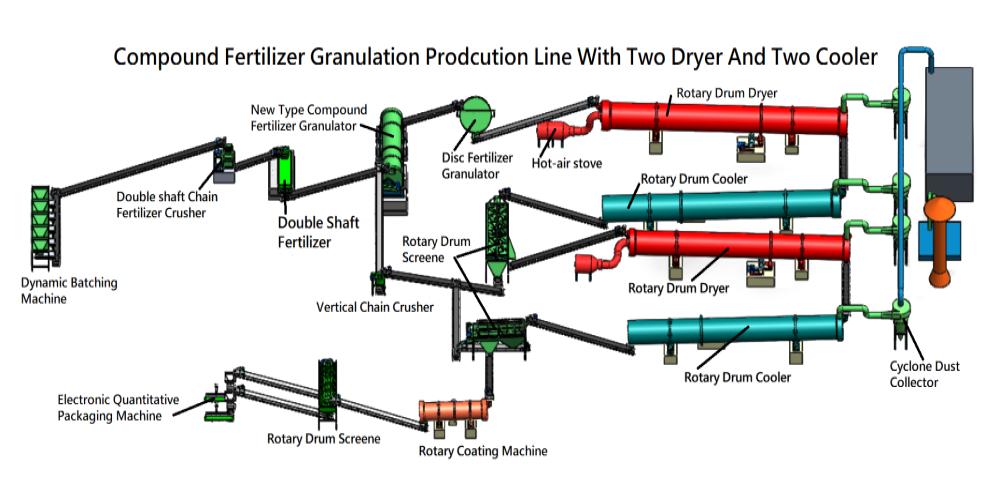
A compound fertilizer production line typically involves several processes that convert raw materials into compound fertilizers that contain multiple nutrients. The specific processes involved will depend on the type of compound fertilizer being produced, but some of the common processes include:
1.Raw Material Handling: The first step in compound fertilizer production is to handle the raw materials that will be used to make the fertilizer. This includes sorting and cleaning the raw materials, as well as preparing them for the subsequent production processes.
2.Mixing and Crushing: The raw materials are then mixed and crushed to ensure uniformity of the mixture. This is important to ensure that the final product has consistent nutrient content.
3.Granulation: The mixed and crushed raw materials are then formed into granules using a granulation machine. Granulation is important to ensure that the fertilizer is easy to handle and apply, and that it releases its nutrients slowly over time.
4.Drying: The newly formed granules are then dried to remove any moisture that may have been introduced during the granulation process. This is important to ensure that the granules do not clump together or degrade during storage.
5.Cooling: The dried granules are then cooled to ensure that they are at a stable temperature before they are coated with additional nutrients.
6.Coating: The granules are then coated with additional nutrients using a coating machine. This step is important to ensure that the compound fertilizer has a balanced nutrient content and releases its nutrients slowly over time.
7.Packaging: The final step in compound fertilizer production is to package the granules into bags or other containers, ready for distribution and sale.
Overall, compound fertilizer production lines are complex processes that require careful attention to detail and strict quality control measures to ensure that the final product is effective and safe to use. By combining multiple nutrients into a single fertilizer product, compound fertilizers can help promote more efficient and effective nutrient uptake by plants, leading to improved crop yields and quality.
Related products
-
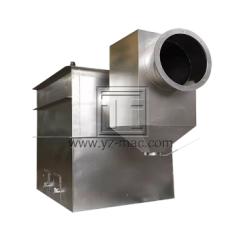
Hot blast stove equipment
Hot blast stove equipment is a type of heating equipment used to generate high-temperature air for various industrial processes. It is commonly used in industries such as metallurgy, chemical, building materials, and food processing. The hot blast stove burns solid fuel such as coal or biomass, which heats the air that is blown into the furnace or kiln. The high-temperature air can then be used for drying, heating, and other industrial processes. The design and size of the hot blast stove can...
-
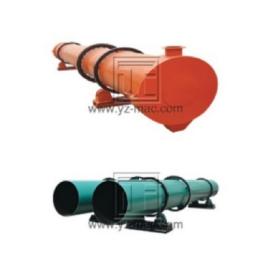
Compound fertilizer drying and cooling equipment
Compound fertilizer drying and cooling equipment are used in the final stage of the production process to remove excess moisture from the compound fertilizer and lower its temperature. This helps to improve the quality and stability of the fertilizer, as well as increase its shelf life. There are several types of compound fertilizer drying and cooling equipment, including: 1.Rotary Dryer: A rotary dryer is a type of drying equipment that uses a rotating drum to dry the compound fertilizer. Th...
-
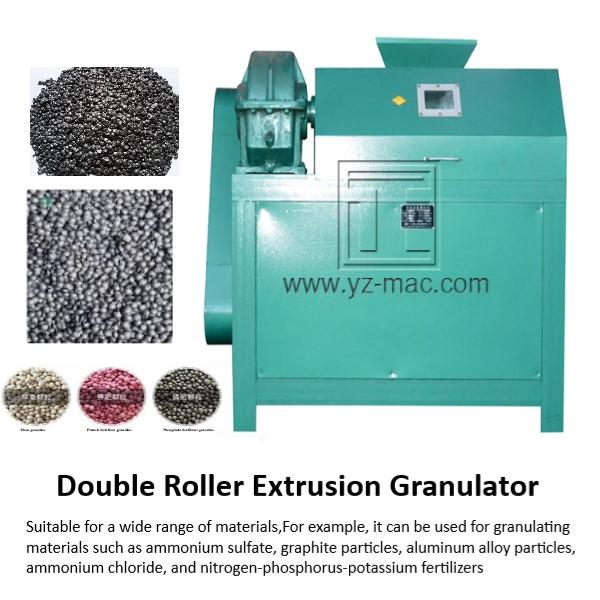
Graphite pellet extrusion system
A graphite pellet extrusion system is a specialized setup or equipment used for the extrusion of graphite pellets. It typically consists of various components and machinery that work together to form graphite pellets of a specific size and shape. Here are some key elements commonly found in a graphite pellet extrusion system: 1. Extruder: The extruder is the core component of the system. It includes a screw or ram mechanism that applies pressure to the graphite material, forcing it through a ...
-
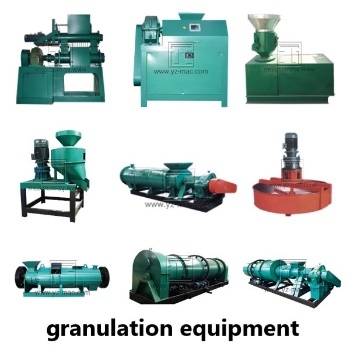
Organic fertilizer granulator machine
An organic fertilizer granulator machine is a powerful tool in the realm of organic farming. It enables the transformation of organic waste materials into high-quality granules, which can be used as nutrient-rich fertilizers. Benefits of an Organic Fertilizer Granulator Machine: Efficient Nutrient Delivery: The granulation process of organic fertilizer converts raw organic waste into concentrated granules rich in essential nutrients. These granules provide a slow-release source of nutrients, ...
-
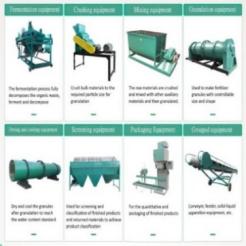
Organic fertilizer equipment price
The price of organic fertilizer equipment can vary widely depending on a number of factors such as the type of equipment, the capacity of the equipment, the quality of the materials used, and the location of the manufacturer. Here are some approximate price ranges for some common organic fertilizer equipment: 1.Compost turners: $2,000-$10,000 USD depending on the size and type of machine. 2.Crushers: $1,000-$5,000 USD depending on the size and capacity of the machine. 3.Mixers: $3,000-$15,000...
-
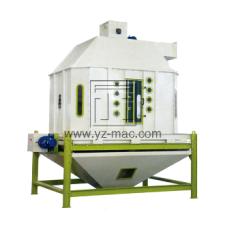
Organic Fertilizer Fluidized Bed Dryer
An organic fertilizer fluidized bed dryer is a type of drying equipment that uses a fluidized bed of heated air to dry organic materials, such as compost, manure, and sludge, to produce dry organic fertilizer. The fluidized bed dryer typically consists of a drying chamber, a heating system, and a bed of inert material, such as sand or silica, which is fluidized by a stream of hot air. The organic material is fed into the fluidized bed, where it is tumbled and exposed to the hot air, which rem...