

Compost machines
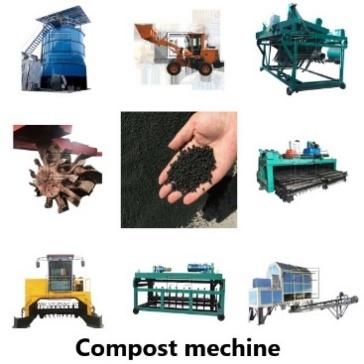
Compost machines are specialized equipment designed to facilitate and streamline the composting process. These machines help convert organic waste materials into nutrient-rich compost through efficient decomposition, aeration, and mixing. Here are some key types of compost machines commonly used in composting operations:
Compost Turners:
Compost turners are machines specifically designed to mix and aerate compost piles or windrows. They use rotating drums, augers, or paddles to lift and turn the compost materials, ensuring proper aeration and uniform decomposition. Compost turners enhance microbial activity and accelerate the composting process.
Compost Shredders:
Compost shredders, also known as chipper shredders or green waste shredders, are used to break down larger organic waste materials into smaller pieces. These machines reduce the size of branches, leaves, garden waste, and other materials, facilitating faster decomposition and creating compostable material.
Compost Screens:
Compost screens, such as trommel screens or vibrating screens, are used to separate larger particles, debris, and contaminants from the finished compost. These screens ensure that the final compost product has a consistent particle size and is free from unwanted materials.
Compost Bagging Machines:
Compost bagging machines automate the process of filling and sealing compost into bags or containers. These machines improve efficiency and consistency in packaging compost products. Compost bagging machines are available in various configurations, including manual, semi-automatic, and fully automatic systems.
Compost Granulators:
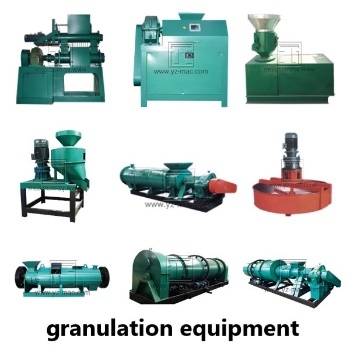
Compost granulators, also known as pelletizing machines, are used to transform compost into uniform granules or pellets. These machines enhance the handling, storage, and application of compost fertilizer. Compost granulators typically involve processes such as drying, grinding, mixing, and pelletizing to produce consistent and high-quality compost granules.
Compost Mixers:
Compost mixers are used to blend different compost materials, ensuring a homogeneous mixture for optimal nutrient distribution. These machines facilitate the blending of various feedstocks, such as green waste, food waste, and animal manure, to achieve a balanced and nutrient-rich compost blend.
These compost machines are available in various sizes and configurations to suit different composting needs, from small-scale home composting to large commercial operations. The selection of the appropriate compost machine depends on factors such as the scale of composting, feedstock type, desired compost quality, available space, and budget considerations.
Related products
-
Fertilizer granulation process
The fertilizer granulation process is a crucial step in the production of high-quality fertilizers. It involves transforming raw materials into granules that are easier to handle, store, and apply. Granulated fertilizers offer numerous benefits, including improved nutrient distribution, reduced nutrient loss, and enhanced crop uptake. Stage 1: Raw Material Preparation The first stage of the fertilizer granulation process involves preparing the raw materials. This includes sourcing and select...
-
Commercial composting equipment
The purpose of composting is to control the decay process as efficiently, quickly, with low emissions and odor-free as possible, breaking down organic matter into stable, plant-friendly, and high-quality organic products. Having the right composting equipment can help increase the profitability of commercial composting by producing better quality compost.
-
Cow manure organic fertilizer production line
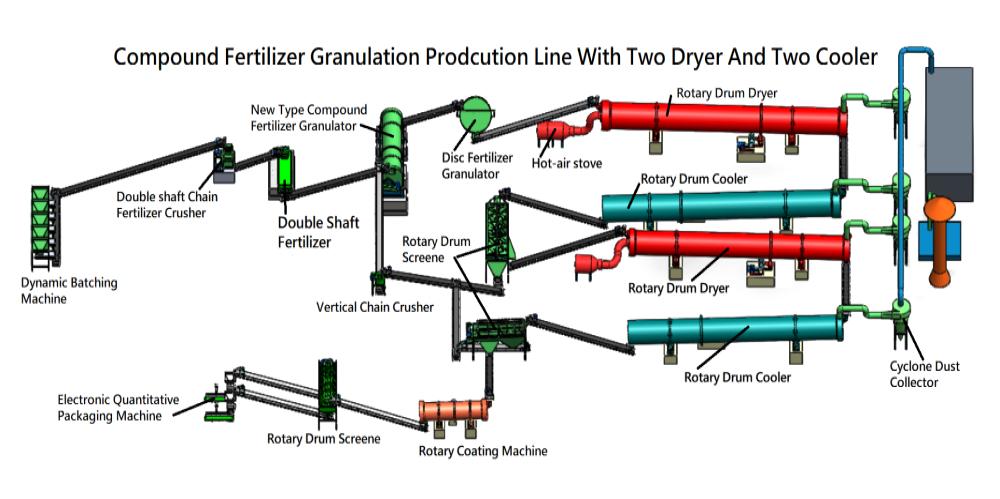
A cow manure organic fertilizer production line typically involves the following processes: 1.Raw Material Handling: The first step is to collect and handle the cow manure from dairy farms, feedlots or other sources. The manure is then transported to the production facility and sorted to remove any large debris or impurities. 2.Fermentation: The cow manure is then processed through a fermentation process. This involves creating an environment that is conducive to the growth of microorganisms ...
-

Organic fertilizer production process
The organic fertilizer production process typically involves several stages, including: 1.Collection of organic waste: This includes collecting organic waste materials such as agricultural waste, animal manure, food waste, and municipal solid waste. 2.Pre-treatment: The collected organic waste materials are pre-treated to prepare them for the fermentation process. Pre-treatment can include shredding, grinding, or chopping the waste to reduce its size and make it easier to handle. 3.Fermentati...
-
Composting large scale
Composting on a large scale is an effective approach to manage organic waste and contribute to sustainable waste management practices. It involves the controlled decomposition of organic materials on a larger volume to produce nutrient-rich compost. Windrow Composting: Windrow composting is a widely used method for large-scale composting. It involves forming long, narrow piles or windrows of organic waste materials, such as yard trimmings, food waste, and agricultural residues. The windrows ...
-

Organic Fertilizer Circular Vibration Sieving M...
Organic fertilizer circular vibration sieving machine is a type of equipment used for separating and screening organic materials in the production of fertilizers. It is a circular motion vibrating screen that operates on an eccentric shaft and is designed to remove impurities and oversized particles from organic materials. The machine is made up of a screen box, a vibration motor, and a base. The organic material is fed into the machine through a hopper, and the vibration motor causes the scr...