

best compost machine
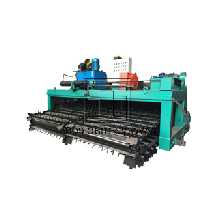
The best compost machine for you will depend on your specific needs and preferences, as well as the type and amount of organic waste you want to compost. Here are some popular types of compost machines:
1.Tumbler composters: These machines are designed with a drum that rotates on an axis, which allows for easy turning and mixing of the compost. They are generally easy to use and are a good option for people with limited space.
2.Worm composters: Also known as vermicomposting, these machines use worms to break down organic waste. They are ideal for people with small yards or balconies, and they produce high-quality compost quickly.
3.In-vessel composters: These machines are designed to control temperature, moisture, and air flow to speed up the composting process. They are a good option for large amounts of organic waste and can be used for commercial composting.
4.Electric composters: These machines use heat and mechanical mixing to speed up the composting process. They are a good option for people with limited time or physical ability to manually turn a compost pile.
5.Bokashi composters: These machines use a special fermentation process to break down organic waste. They are a good option for people who want to compost food waste but have limited space or don’t want to deal with worms.
Ultimately, the best compost machine for you will depend on your specific needs and preferences, as well as the amount and type of organic waste you want to compost. Consider factors such as cost, size, ease of use, and maintenance requirements when choosing a compost machine.
Related products
-
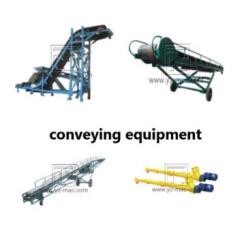
Earthworm manure fertilizer conveying equipment
Earthworm manure fertilizer conveying equipment refers to the equipment used to transport earthworm manure fertilizer from one process to another during the production process. The equipment can include belt conveyors, screw conveyors, bucket elevators, and pneumatic conveyors. Belt conveyors are the most commonly used type of conveying equipment in fertilizer production, as they are versatile and easy to operate. Screw conveyors are also popular due to their ability to handle various types o...
-
Small Commercial Composter
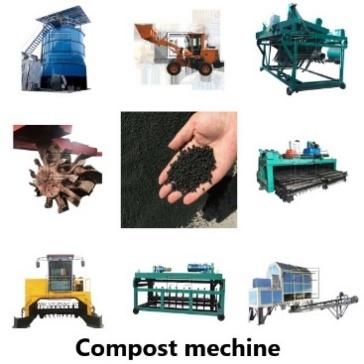
A small commercial composter is an ideal solution for businesses, institutions, and organizations seeking efficient organic waste management. Designed to handle moderate volumes of organic waste, these compact composters offer a convenient and environmentally friendly way to process organic materials. Benefits of Small Commercial Composters: Waste Diversion: Small commercial composters allow businesses to divert organic waste from landfills, reducing the environmental impact and contributing...
-
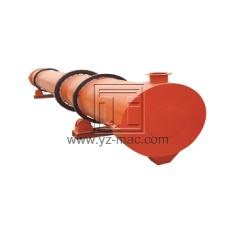
Organic fertilizer dryer
An organic fertilizer dryer is a machine used to remove moisture from granulated organic fertilizers. The dryer uses a heated air stream to evaporate moisture from the surface of the granules, leaving behind a dry and stable product. The organic fertilizer dryer is an essential piece of equipment in the production of organic fertilizers. After granulation, the moisture content of the fertilizer is typically between 10-20%, which is too high for storage and transportation. The dryer reduces th...
-
Rotary drum composting
Rotary drum composting is a highly efficient method of processing organic waste materials into nutrient-rich compost. This technique utilizes a rotating drum to create an optimal environment for composting, ensuring effective decomposition and transformation of organic waste. Benefits of Rotary Drum Composting: Rapid Decomposition: The rotating drum facilitates efficient mixing and aeration of organic waste, promoting rapid decomposition. The increased airflow within the drum enhances the ac...
-

Bio-organic fertilizer preparation
Bio-organic fertilizer is actually made by inoculating microbial compound bacteria on the basis of the finished product of organic fertilizer. The difference is that a dissolving tank is added at the back end of organic fertilizer cooling and screening, and a puff bacteria coating machine can complete the whole process of bio-organic fertilizer production. Its production process and equipment: raw material fermentation preparation, raw material pretreatment, granulation, drying, cooling and s...
-
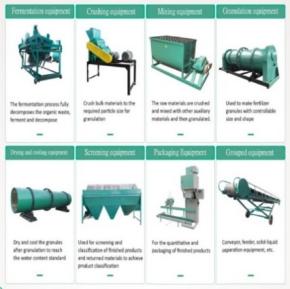
Fertilizer special equipment
Fertilizer special equipment refers to machinery and equipment used specifically for the production of fertilizers, including organic, inorganic, and compound fertilizers. Fertilizer production involves several processes, such as mixing, granulation, drying, cooling, screening, and packaging, each of which requires different equipment. Some examples of fertilizer special equipment include: 1.Fertilizer mixer: used for the even mixing of raw materials, such as powders, granules, and liquids, b...