

Organic fertilizer granulator machine
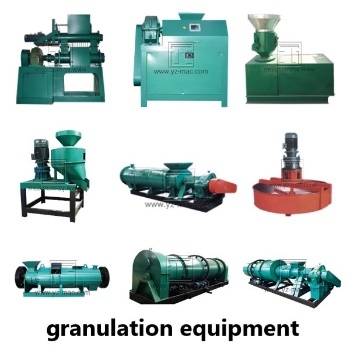
An organic fertilizer granulator machine is a powerful tool in the realm of organic farming. It enables the transformation of organic waste materials into high-quality granules, which can be used as nutrient-rich fertilizers.
Benefits of an Organic Fertilizer Granulator Machine:
Efficient Nutrient Delivery: The granulation process of organic fertilizer converts raw organic waste into concentrated granules rich in essential nutrients. These granules provide a slow-release source of nutrients, ensuring plants receive a consistent supply over an extended period. This improves nutrient uptake, plant growth, and overall crop productivity.
Waste Utilization and Recycling: Organic fertilizer granulators allow for the effective utilization and recycling of various organic waste materials. Agricultural residues, food waste, animal manure, and other organic by-products can be processed into valuable organic fertilizers, reducing waste volumes and promoting a circular economy.
Improved Soil Health and Fertility: Organic fertilizer granules provide a balanced combination of macro and micronutrients, organic matter, and beneficial microorganisms. When applied to the soil, these granules enhance soil fertility, structure, and water-holding capacity. They stimulate microbial activity, promote beneficial soil organisms, and contribute to long-term soil health.
Environmentally Friendly: By utilizing organic waste materials as feedstock, organic fertilizer granulation reduces reliance on chemical fertilizers, thereby minimizing environmental pollution and ecological imbalances. It promotes sustainable farming practices, reduces greenhouse gas emissions, and supports the preservation of natural resources.
Working Principle of an Organic Fertilizer Granulator Machine:
An organic fertilizer granulator machine employs a variety of techniques to transform organic waste into granules. Common methods include:
Extrusion: This process involves forcing the organic material through an extrusion die or plate, where it undergoes pressure and friction. The compacted material is then cut into granules of the desired size.
Rotary Drum: In this method, the organic material is fed into a rotating drum. As the drum rotates, the material adheres to the inner surface and forms granules through a combination of rolling, agglomeration, and tumbling.
Pan Granulation: Here, the organic material is placed in a shallow pan or disc, which rotates at a controlled speed. The material undergoes agglomeration and granulation as it moves across the pan’s surface, resulting in spherical granules.
Applications of Organic Fertilizer Granulator Machines:
Agriculture and Horticulture: Organic fertilizer granules are widely used in agriculture and horticulture for crop production. They provide essential nutrients to the soil, improve soil fertility, and promote healthy plant growth. Organic fertilizers are particularly valued in organic farming systems, where the emphasis is on sustainable practices and environmental stewardship.
Gardens and Lawns: Organic fertilizer granules are suitable for home gardens, vegetable plots, flower beds, and lawns. They enhance soil quality, promote vibrant growth, and contribute to the overall health and beauty of plants.
Landscaping and Turf Management: Organic fertilizer granules are used in landscaping projects, including parks, golf courses, and sports fields. They nourish the soil, strengthen root systems, and enhance the appearance and resilience of turf.
Nursery and Greenhouse Production: Organic fertilizer granules are essential in nursery and greenhouse operations. They provide a controlled-release nutrient source for young plants, ensuring optimal growth and development.
An organic fertilizer granulator machine offers significant benefits in the realm of sustainable agriculture. By transforming organic waste materials into nutrient-rich granules, it promotes efficient waste utilization, soil health, and environmentally friendly farming practices. The granulated organic fertilizers find applications in agriculture, horticulture, landscaping, and nursery production, contributing to improved plant growth, soil fertility, and long-term sustainability.
Related products
-
Speedy composter
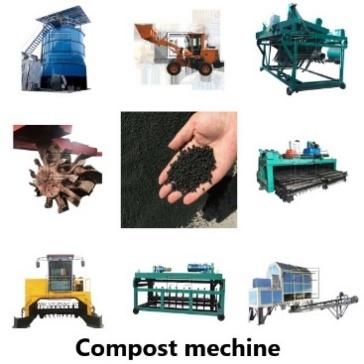
A speedy composter is a specialized machine designed to expedite the composting process, reducing the time required to produce high-quality compost. Benefits of a Speedy Composter: Rapid Composting: The primary advantage of a speedy composter is its ability to accelerate the composting process significantly. With advanced technology and innovative features, it creates the ideal conditions for rapid decomposition, reducing composting times by up to 50%. This results in a shorter production cy...
-

equipment for fermentation
When it comes to fermentation, having the right equipment is essential for achieving optimal results. The proper equipment helps create a controlled environment that promotes the growth of beneficial microorganisms and ensures successful fermentation. Fermentation Vessels: Fermentation vessels, such as fermentation tanks or fermenters, are containers specifically designed for the fermentation process. They provide a controlled environment for microorganisms to convert organic substances into ...
-
Vermicomposting equipment
Earthworms are nature’s scavengers. They can convert food waste into high nutrients and various enzymes, which can promote the decomposition of organic matter, make it easier for plants to absorb, and have adsorption effects on nitrogen, phosphorus and potassium, so it can promote plant growth. Vermicompost contains high levels of beneficial microorganisms. Therefore, the use of vermicompost can not only maintain the organic matter in the soil, but also ensure that the soil will not be ...
-
Fertilizer conveying equipment
Fertilizer conveying equipment refers to machinery and tools that transport fertilizers from one place to another during the fertilizer production process. These equipment are used to move fertilizer materials between different stages of production, such as from the mixing stage to the granulation stage, or from the granulation stage to the drying and cooling stage. Common types of fertilizer conveying equipment include: 1.Belt conveyor: a continuous conveyor that uses a belt to transport fer...
-
Fertilizer granulation
Fertilizer granulation is a crucial process in the production of fertilizers that involves transforming raw materials into granular form. Granular fertilizers offer several advantages, including improved nutrient release, reduced nutrient loss, and convenient application. Significance of Fertilizer Granulation: Fertilizer granulation plays a vital role in optimizing nutrient delivery to plants. The process involves combining essential nutrients, binders, and additives to form uniform granule...
-
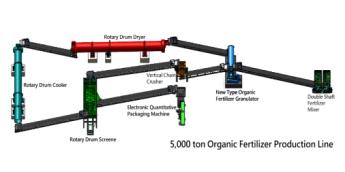
Organic fertilizer production line
An organic fertilizer production line typically includes several stages of processing, each involving different machines and equipment. Here is a general overview of the process: 1.Pre-treatment stage: This involves collecting and sorting the organic materials to be used in the production of fertilizer. The materials are typically shredded and mixed together. 2.Fermentation stage: The mixed organic materials are then placed in a fermentation tank or machine, where they undergo a natural decom...