

Machine de compostage
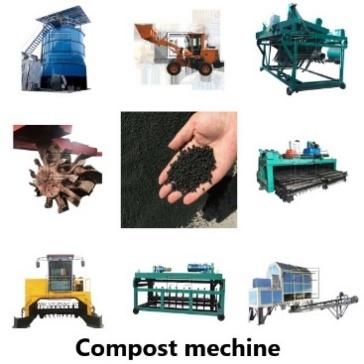
A composting machine, also known as a composting system or composting equipment, is a specialized apparatus designed to efficiently process organic waste and facilitate the composting process. With various types and sizes available, these machines offer a streamlined and controlled approach to composting, enabling individuals, businesses, and communities to manage their organic waste effectively.
Benefits of a Composting Machine:
Efficient Organic Waste Processing: Composting machines expedite the decomposition of organic waste, reducing processing time significantly compared to traditional composting methods. These machines create optimal conditions for microorganisms to break down the waste materials efficiently, resulting in faster compost production.
Reduced Landfill Waste: By diverting organic waste from landfills, composting machines contribute to waste reduction and promote sustainable waste management practices. By composting organic materials, valuable resources are recycled back into the environment instead of being buried in landfills, reducing greenhouse gas emissions and minimizing environmental impact.
Enhanced Nutrient-Rich Compost: Composting machines facilitate the production of nutrient-rich compost. The controlled environment, efficient mixing, and proper aeration provided by these machines ensure the ideal conditions for microorganisms to thrive and convert organic waste into a high-quality compost that can be used for soil enrichment and plant growth.
Space-Saving and Odor Control: Composting machines are designed to accommodate varying waste volumes and are often compact in size, making them suitable for both small-scale and large-scale operations. These machines also incorporate odor control mechanisms to minimize unpleasant smells associated with decomposing organic waste.
Types of Composting Machines:
In-Vessel Composting Machines: These machines facilitate composting in enclosed vessels, allowing for precise control of temperature, moisture, and airflow. In-vessel composting machines are efficient, can handle large volumes of waste, and are ideal for commercial and industrial applications.
Windrow Composting Machines: Windrow composting machines are designed to process organic waste in long, narrow rows called windrows. These machines automate the turning and aeration of the windrows, ensuring proper decomposition and efficient compost production. They are commonly used in municipal composting facilities and large-scale composting operations.
Tumbler Composting Machines: Tumbler composting machines utilize rotating drums or barrels to mix and aerate the organic waste. These machines are popular among home gardeners and small-scale composting enthusiasts due to their compact size, ease of use, and efficient composting capabilities.
Vermicomposting Machines: Vermicomposting machines employ the use of worms to break down organic waste. These machines provide a controlled environment for worms to thrive and accelerate the decomposition process. Vermicomposting machines are suitable for small-scale applications, such as home composting or educational settings.
Applications of Composting Machines:
Residential and Community Composting: Composting machines are used in residential settings, community gardens, and housing complexes to manage organic waste generated by households and communities. These machines facilitate on-site composting, reducing the need for waste collection and transportation.
Commercial and Industrial Composting: Large-scale composting machines are utilized in commercial and industrial settings, such as restaurants, hotels, food processing facilities, and agricultural operations. These machines can handle substantial waste volumes and efficiently process organic waste, enabling businesses to recycle their organic waste streams effectively.
Municipal and Waste Management Facilities: Composting machines play a crucial role in municipal composting programs and waste management facilities. They help manage organic waste from households, parks, and public spaces, diverting it from landfills and producing valuable compost for landscaping, soil remediation, and agricultural purposes.
Composting machines offer a convenient and efficient solution for organic waste management. By accelerating the composting process, reducing landfill waste, and producing nutrient-rich compost, these machines contribute to sustainable waste management practices.
Related products
-
Industrial composting
Industrial composting is a systematic and large-scale approach to managing organic waste materials, transforming them into nutrient-rich compost through controlled decomposition processes. This method offers an efficient and sustainable solution for diverting organic waste from landfills, reducing greenhouse gas emissions, and producing valuable compost for various applications. Benefits of Industrial Composting: Waste Diversion: Industrial composting helps divert organic waste materials, su...
-

Drum fertilizer granulator
A drum fertilizer granulator is a type of fertilizer granulator that uses a large, rotating drum to produce uniform, spherical granules. The granulator works by feeding the raw materials, along with a binder material, into the rotating drum. As the drum rotates, the raw materials are tumbled and agitated, allowing the binder to coat the particles and form granules. The size and shape of the granules can be adjusted by changing the speed of rotation and the angle of the drum. Drum fertilizer g...
-
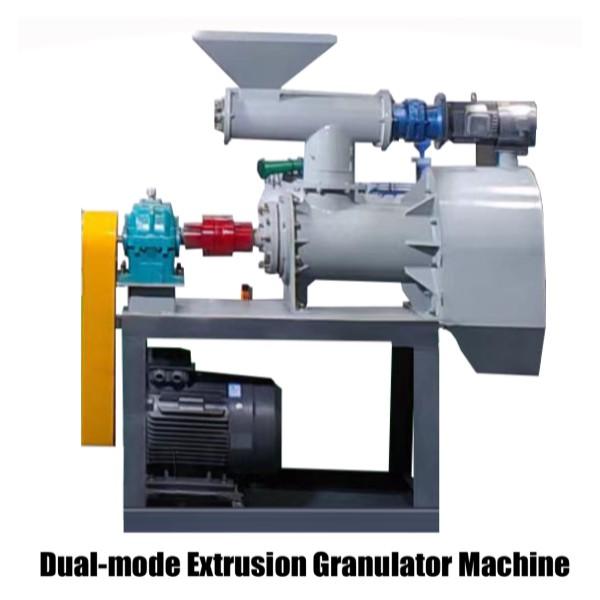
Dual-mode extrusion granulator
The dual-mode extrusion granulator is capable of directly granulating various organic materials after fermentation. It does not require drying of the materials before granulation, and the moisture content of the raw materials can range from 20% to 40%. After the materials are pulverized and mixed, they can be processed into cylindrical pellets without the need for binders. The resulting pellets are solid, uniform, and visually appealing, while also reducing drying energy consumption and achie...
-
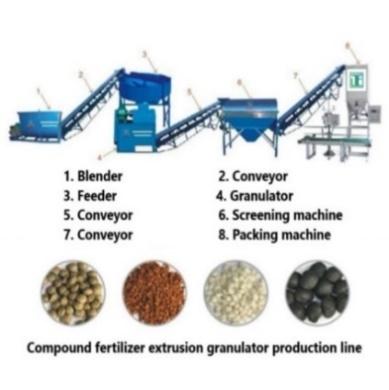
Compound fertilizer production line
A compound fertilizer production line is a comprehensive system designed to manufacture compound fertilizers, which are fertilizers composed of two or more nutrients essential for plant growth. This production line combines various equipment and processes to efficiently produce high-quality compound fertilizers. Types of Compound Fertilizers: Nitrogen-Phosphorus-Potassium (NPK) Fertilizers: NPK fertilizers are the most commonly used compound fertilizers. They contain a balanced combination o...
-
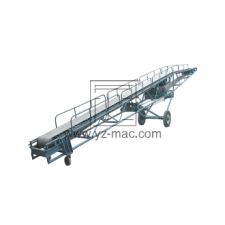
Animal manure fertilizer conveying equipment
Animal manure fertilizer conveying equipment is used to move the fertilizer from one location to another within the fertilizer production process. This includes transporting raw materials such as manure and additives, as well as transporting finished fertilizer products to storage or distribution areas. The equipment used for conveying animal manure fertilizer includes: 1.Belt conveyors: These machines use a belt to move the fertilizer from one location to another. Belt conveyors can be eithe...
-
Composting equipment for sale
Compost turners are essential tools for aerating and mixing compost piles or windrows. These machines feature rotating drums, paddles, or augers that agitate the compost, ensuring proper oxygen distribution and accelerating the decomposition process. Compost turners are available in various sizes, from small-scale backyard models to large-scale commercial units suitable for agricultural and industrial applications. Applications: Compost turners are widely used in large-scale agricultural oper...