

Fertilizer granulator
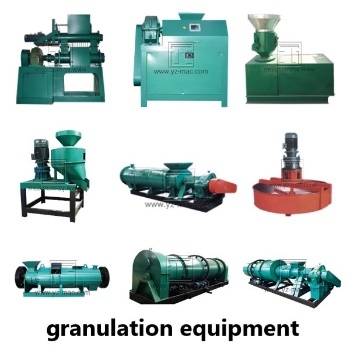
A fertilizer granulator is a specialized machine designed to transform raw fertilizer materials into granules, facilitating easier storage, transportation, and application. With the ability to process various organic and inorganic materials, a fertilizer granulator plays a crucial role in the production of high-quality fertilizers.
Benefits of a Fertilizer Granulator:
Enhanced Nutrient Release: A fertilizer granulator helps optimize nutrient release in fertilizers. By granulating raw materials into specific sizes and shapes, it ensures controlled nutrient release, improving nutrient absorption by plants and minimizing nutrient loss through leaching or runoff.
Improved Handling and Storage: Granulated fertilizers are easier to handle, transport, and store compared to powdered or raw materials. The granules have a higher density, reduced dustiness, and better flowability, making them more convenient to handle in bulk quantities.
Controlled Nutrient Composition: Fertilizer granulators allow for precise blending of raw materials, enabling the production of customized granules with specific nutrient compositions. This flexibility ensures that the granulated fertilizers meet the specific nutrient requirements of different crops, soils, and growth stages.
Reduced Environmental Impact: Granulated fertilizers produced by fertilizer granulators are designed to release nutrients gradually, minimizing the risk of nutrient runoff and pollution. The controlled release mechanisms help maximize nutrient uptake by plants and minimize the negative environmental impact associated with excess fertilizer application.
Types of Fertilizer Granulators:
Rotary Drum Granulator: This type of granulator utilizes a large rotating drum to agglomerate and granulate the fertilizer materials. The drum’s internal fins and lifting flights facilitate the tumbling and rolling action, forming the granules. Rotary drum granulators are versatile and widely used in both organic and inorganic fertilizer production.
Disc Granulator: Disc granulators feature a rotating disc and an adjustable inclination angle. The raw materials are fed onto the disc, where they undergo continuous tumbling and rolling motion. The high-speed rotation of the disc promotes granule formation, and the adjustable angle allows control over the size and shape of the granules.
Pan Granulator: Pan granulators consist of a shallow pan or tray with a central agitating mechanism. The raw materials are fed into the pan, and the agitator distributes the materials, causing them to adhere and form granules. Pan granulators are suitable for producing uniform, spherical granules with consistent sizes.
Applications of Fertilizer Granulators:
Agricultural Fertilizers: Fertilizer granulators are extensively used in the production of agricultural fertilizers. They help convert raw materials, such as nitrogen, phosphorus, and potassium sources, into granules suitable for crop nutrition. The granulated fertilizers provide a controlled release of nutrients, supporting optimal plant growth and maximizing crop yield.
Organic Fertilizers: Fertilizer granulators play a vital role in the production of organic fertilizers. They can process organic materials, such as animal manure, compost, and crop residues, into granules rich in organic matter and essential nutrients. These granulated organic fertilizers contribute to soil fertility, improve soil structure, and promote sustainable agriculture practices.
Blended Fertilizers: Fertilizer granulators enable the production of blended or compound fertilizers. By combining different raw materials with varying nutrient compositions, granulated blended fertilizers provide a balanced nutrient supply tailored to specific crop requirements. This flexibility allows farmers to address specific nutrient deficiencies and optimize nutrient management.
Specialized Fertilizers: Fertilizer granulators can also be utilized in the production of specialized fertilizers, such as slow-release fertilizers, controlled-release fertilizers, and micronutrient-enriched fertilizers. These specialized granulated fertilizers offer targeted nutrient delivery, extended nutrient availability, and enhanced nutrient efficiency.
A fertilizer granulator is a valuable tool in the production of high-quality fertilizers. By transforming raw materials into granules, fertilizer granulators provide benefits such as enhanced nutrient release, improved handling and storage, controlled nutrient composition, and reduced environmental impact. With different types available, including rotary drum granulators, disc granulators, and pan granulators, fertilizer granulators cater to various fertilizer production needs.
Related products
-
Organic fertilizer production equipment with an...
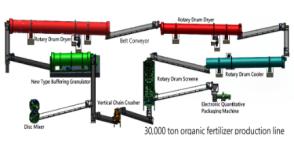
Organic fertilizer production equipment with an annual output of 30,000 tons typically consists of a larger set of equipment compared to the one for 20,000 tons annual output. The basic equipment that may be included in this set are: 1.Composting Equipment: This equipment is used to ferment organic materials and convert them into high-quality organic fertilizers. Composting equipment can include a compost turner, a crushing machine, and a mixing machine. 2.Fermentation Equipment: This equipme...
-
Ompost making machine price
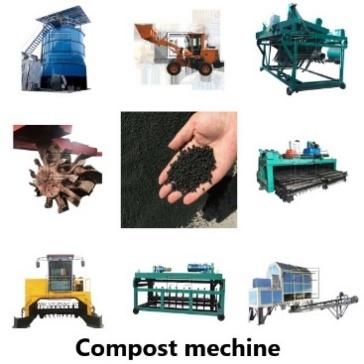
The price of a compost making machine can vary depending on several factors, including the type of machine, capacity, features, brand, and supplier. Large-scale Compost making machines designed for large-scale commercial operations or have higher capacities and advanced features. These machines are more robust and can handle significant volumes of organic waste. Prices for large-scale compost making machines can vary significantly depending on the size, specifications, and brand. They can ra...
-

Organic fertilizer processing flow
The basic flow of organic fertilizer processing involves the following steps: 1.Raw material selection: This involves selecting organic materials such as animal manure, crop residue, food waste, and other organic materials suitable for use in making organic fertilizer. 2.Composting: The organic materials are then subjected to a composting process that involves mixing them together, adding water and air, and allowing the mixture to decompose over time. This process helps to break down the orga...
-
Fertilizer granules
Fertilizer granules play a vital role in modern agriculture by providing a convenient and efficient way to deliver essential nutrients to plants. These small, compact particles contain concentrated nutrients and are designed to release their contents gradually, ensuring optimal nutrient uptake by plants. Benefits of Fertilizer Granules: Controlled Nutrient Release: Fertilizer granules are engineered to release nutrients slowly over time, providing a consistent supply to plants. This controll...
-
Organic fertilizer production equipment
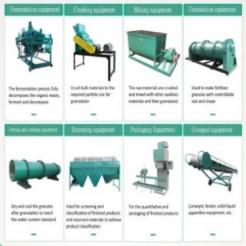
Organic fertilizer production equipment can include a variety of machines and tools depending on the scale and type of organic fertilizer production you are undertaking. Here are some common pieces of equipment used in organic fertilizer production: 1.Composting equipment: This includes machines such as compost turners, shredders, and mixers that help with the decomposition of organic materials. 2.Fermentation equipment: This equipment is used for the fermentation process of organic waste mat...
-

Compound fertilizer conveying equipment
Compound fertilizer conveying equipment is used to transport the granular fertilizer from one stage of the production process to another. The equipment must be able to handle the bulk density and flow characteristics of the fertilizer to ensure smooth and efficient transportation. There are several types of conveying equipment available for use in compound fertilizer production, including: 1.Belt Conveyor: A belt conveyor is a type of conveying equipment that uses a belt to transport the fert...