

Compost windrow turner
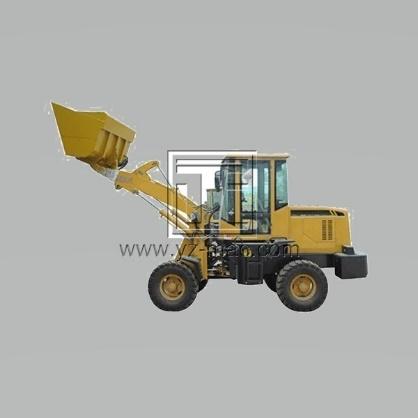
A compost windrow turner is to efficiently turn and aerate compost windrows during the composting process. By mechanically agitating the compost piles, these machines promote oxygen flow, mix the composting materials, and accelerate decomposition.
Types of Compost Windrow Turners:
Tow-Behind Turners:
Tow-behind compost windrow turners are commonly used in small to medium-scale composting operations. They are attached to tractors or other towing vehicles and are ideal for turning windrows within limited spaces. These turners are versatile, cost-effective, and offer ease of operation and maneuverability.
Self-Propelled Turners:
Self-propelled compost windrow turners are designed for larger-scale composting operations. These turners are equipped with their own engines, allowing for independent movement and operation. Self-propelled turners are efficient, offer increased maneuverability, and are suitable for larger windrow sizes and higher composting volumes.
Working Principle of Compost Windrow Turners:
Compost windrow turners employ various mechanisms to agitate and turn the compost windrows:
Paddle or Flail Systems:
Some turners use paddle or flail systems that rotate or oscillate, effectively lifting and turning the compost material. These systems create a tumbling motion, ensuring thorough mixing and aeration of the compost windrows. Paddle or flail turners are suitable for medium-sized windrows and provide excellent mixing efficiency.
Drum or Crawler Systems:
Other turners utilize drum or crawler systems that feature large rotating drums or crawler tracks. As the turner moves along the windrow, the drum or crawler mechanism lifts and tumbles the compost material, achieving effective mixing and aeration. Drum or crawler turners are ideal for larger windrows and offer high throughput and productivity.
Applications of Compost Windrow Turners:
Commercial Composting:
Compost windrow turners are extensively used in commercial composting facilities to manage large volumes of organic waste. These turners facilitate the aeration and mixing of the windrows, creating optimal conditions for decomposition. They help produce high-quality compost that meets regulatory standards and can be sold or distributed for various applications.
Municipal Solid Waste Management:
In municipal solid waste management, compost windrow turners play a vital role in composting organic waste collected from residential areas, parks, and commercial establishments. Turning the compost windrows ensures efficient decomposition, reduces odors, and diverts organic waste from landfills, promoting sustainable waste management practices.
Agriculture and Horticulture:
Compost windrow turners find applications in agriculture and horticulture, where compost is used as a soil amendment. These turners help produce nutrient-rich compost suitable for crop production, soil fertility enhancement, and sustainable agricultural practices. The turned compost windrows ensure consistent decomposition and quality.
Land Rehabilitation and Erosion Control:
Compost windrow turners are utilized in land rehabilitation and erosion control projects. They assist in the composting of organic materials used for soil remediation, mine site reclamation, or erosion control measures. The turned windrows promote nutrient cycling, improve soil structure, and support vegetation establishment.
Conclusion:
A compost windrow turner is a valuable machine for efficient composting, as it ensures proper aeration, mixing, and decomposition of compost windrows. Tow-behind and self-propelled turners offer versatility for various scales of composting operations.
Related products
-

Roll Extrusion Granulator
The roll extrusion granulator is an advanced piece of equipment used for transforming organic materials into high-quality granules. This innovative machine utilizes the principle of extrusion to compress and shape organic matter into uniform granules, making it an essential tool in the organic fertilizer production process. Working Principle: The roll extrusion granulator operates by squeezing and forming organic materials between two counter-rotating rollers. As the material passes through ...
-

Organic fertilizer equipment installation
Installing organic fertilizer equipment can be a complex process that requires careful planning and attention to detail. Here are some general steps to follow when installing organic fertilizer equipment: 1.Site preparation: Choose a suitable location for the equipment and ensure the site is level and has access to utilities such as water and electricity. 2.Equipment delivery and placement: Transport the equipment to the site and place it in the desired location according to the manufacturer&...
-
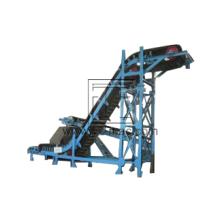
Large angle fertilizer conveyor
A large angle fertilizer conveyor is a type of belt conveyor used to transport fertilizer and other materials in a vertical or steeply inclined direction. The conveyor is designed with a special belt that has cleats or corrugations on its surface, which allows it to grip and carry materials up steep inclines at angles of up to 90 degrees. Large angle fertilizer conveyors are commonly used in fertilizer production and processing facilities, as well as in other industries that require the trans...
-
Sheep manure fertilizer conveying equipment
Sheep manure conveying equipment typically includes conveyor belts, screw conveyors, and bucket elevators. Conveyor belts are the most commonly used type of conveying equipment in sheep manure fertilizer production. They are flexible and can transport materials over long distances. Screw conveyors are often used to transport materials with high moisture content, such as sheep manure, as they can prevent material clogging. Bucket elevators are used to elevate materials vertically, typically fr...
-
Fertilizer mixing equipment
Fertilizer mixing equipment is used to blend different fertilizer materials together to create a customized fertilizer blend. This equipment is commonly used in the production of compound fertilizers, which require a combination of different nutrient sources. The main features of fertilizer mixing equipment include: 1.Efficient mixing: The equipment is designed to mix different materials thoroughly and evenly, ensuring that all components are well-distributed throughout the blend. 2.Customiza...
-
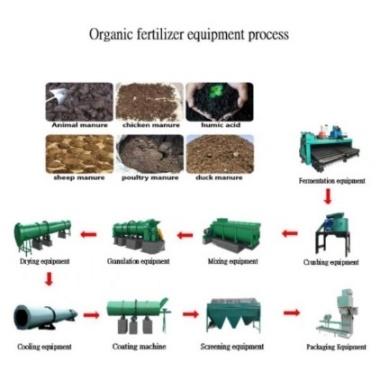
Organic fertilizer line
An organic fertilizer production line is a comprehensive system designed to convert organic materials into high-quality organic fertilizers. With a focus on sustainability and environmental stewardship, this production line utilizes various processes to transform organic waste materials into valuable fertilizers rich in nutrients. Components of an Organic Fertilizer Production Line: Organic Material Pre-processing: The production line begins with the pre-processing of organic materials such ...