

Commercial composting equipment
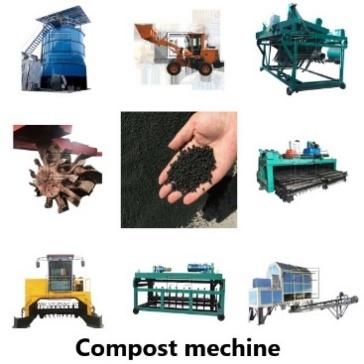
Commercial composting equipment refers to specialized machinery and tools designed for large-scale composting operations in commercial or industrial settings. This equipment enables efficient processing of organic waste materials and the production of high-quality compost.
Windrow Turners:
Windrow turners are large machines designed to turn and mix composting materials in long, narrow piles called windrows. These machines accelerate the composting process by ensuring proper aeration, moisture distribution, and microbial activity throughout the windrows. Windrow turners help maintain optimal conditions for decomposition, resulting in faster and more efficient composting.
Compost Tumblers:
Compost tumblers are rotating drums or vessels that facilitate the mixing and aeration of composting materials. They provide a controlled environment for composting, allowing for efficient decomposition and faster compost production. Compost tumblers are often used in smaller-scale commercial composting operations or for specialized applications.
In-vessel Composting Systems:
In-vessel composting systems involve the use of enclosed containers or vessels to compost organic materials. These systems provide precise control over temperature, moisture, and aeration, creating ideal conditions for microbial activity and decomposition. In-vessel composting systems are suitable for large-scale commercial composting operations and can handle a wide range of organic waste materials.
Compost Screening Equipment:
Compost screening equipment is used to separate the finished compost from larger particles, such as twigs or stones, to produce a uniform and refined product. Screens, trommels, or vibrating screens are commonly used for this purpose. Screening equipment ensures the quality and consistency of the final compost product.
Compost Shredders:
Compost shredders are machines that shred and break down large organic waste materials into smaller pieces. These machines enhance the surface area of the composting materials, promoting faster decomposition and microbial activity. Compost shredders are particularly useful for bulky organic waste, such as tree branches or crop residues.
Temperature and Moisture Monitoring Systems:
Temperature and moisture monitoring systems help track and control critical parameters during the composting process. These systems use sensors and probes to monitor temperature and moisture levels within compost piles or containers. By ensuring optimal conditions, operators can adjust and manage the composting process for optimal performance and compost quality.
Compost Bagging and Packaging Machines:
Compost bagging and packaging machines automate the packaging and sealing of finished compost into bags or containers. These machines improve the efficiency of the packaging process, allowing for faster and more convenient distribution of the compost product. Bagging and packaging machines are essential for commercial composting operations that supply compost to retail markets or end-users.
Compost Moisture Meters:
Compost moisture meters are handheld devices used to measure the moisture content of composting materials. These meters help ensure that the moisture levels within the compost piles or containers are within the optimal range for efficient decomposition. Monitoring and maintaining proper moisture levels are critical for successful composting.
Commercial composting equipment offers several benefits, including increased processing capacity, improved efficiency, accelerated composting process, enhanced compost quality, waste diversion from landfills, and support for sustainable waste management practices. Choosing the appropriate commercial composting equipment based on the specific needs and scale of the operation is crucial for successful and productive composting.
Related products
-

Compound fertilizer fertilizer mixing equipment
Compound fertilizer mixing equipment is used in the production of compound fertilizers to ensure that the nutrients in the fertilizer are evenly distributed throughout the final product. The mixing equipment is used to blend different raw materials together to create a uniform mixture that contains the desired amounts of nitrogen, phosphorus, and potassium. There are several types of compound fertilizer mixing equipment, including: 1.Horizontal mixers: These use a horizontal drum to mix the r...
-
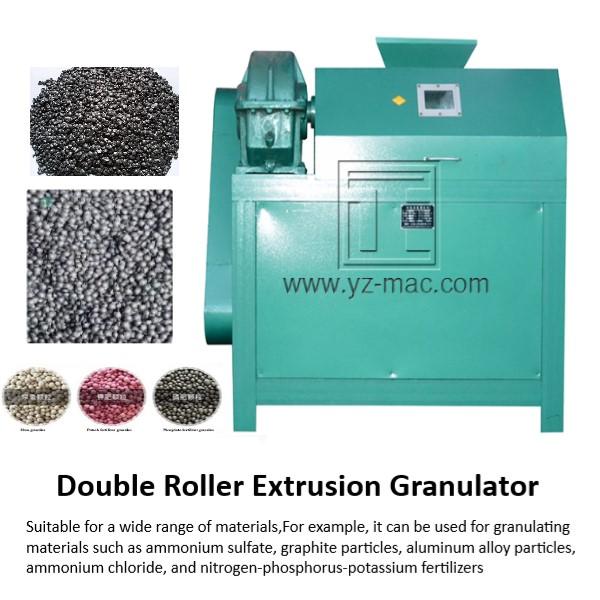
Graphite granulation equipment
Graphite granulation equipment refers to the machinery and devices specifically designed for the process of granulating or pelletizing graphite materials. This equipment is used to transform graphite powder or a graphite mixture into well-formed and uniform graphite granules or pellets. Some common types of graphite granulation equipment include: 1. Pellet mills: These machines use pressure and a die to compress graphite powder or a graphite mixture into compacted pellets of desired size and ...
-
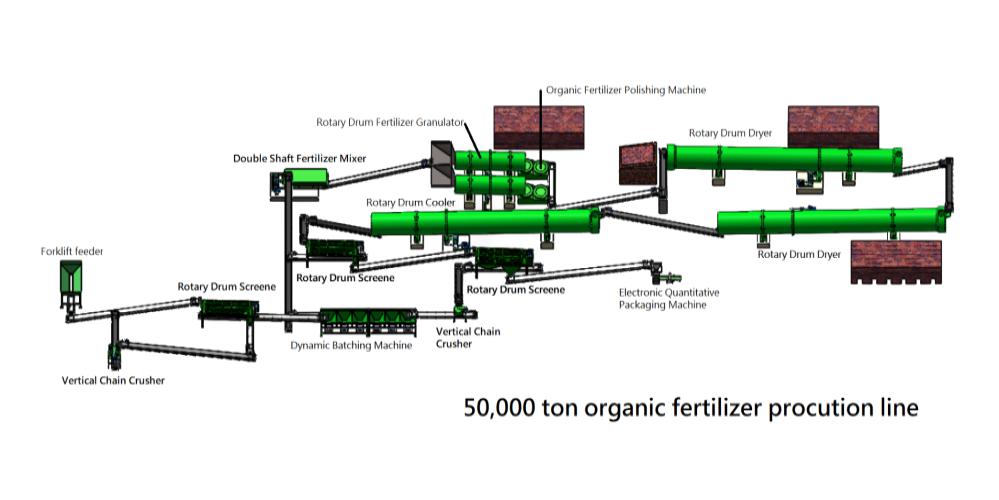
Sheep manure fertilizer complete production line
A complete production line for sheep manure fertilizer involves several processes that transform sheep manure into a high-quality organic fertilizer. The specific processes involved may vary depending on the type of sheep manure being used, but some of the common processes include: 1.Raw Material Handling: The first step in sheep manure fertilizer production is to handle the raw materials that will be used to make the fertilizer. This includes collecting and sorting sheep manure from sheep fa...
-

Double helix fertilizer turning equipment
Double helix fertilizer turning equipment is a type of compost turner that uses two intermeshing augers or screws to turn and mix the organic materials being composted. The equipment consists of a frame, a hydraulic system, two helix-shaped blades or paddles, and a motor to drive the rotation. The main advantages of double helix fertilizer turning equipment include: 1.Efficient Mixing: The intermeshing augers ensure that all parts of the organic materials are exposed to oxygen for efficient d...
-
Fertilizer drying equipment
Fertilizer drying equipment is used to remove excess moisture from the fertilizers, making them suitable for storage and transportation. The following are some types of fertilizer drying equipment: 1.Rotary drum dryer: This is the most commonly used type of fertilizer drying equipment. The rotary drum dryer uses a rotating drum to evenly distribute heat and dry the fertilizer. 2.Fluidized bed dryer: This dryer uses hot air to fluidize and suspend the fertilizer particles, which helps to evenl...
-
Powdery Organic Fertilizer Production Line
A powdery organic fertilizer production line is a comprehensive system designed to manufacture high-quality organic fertilizers in powdered form. This production line combines various processes to convert organic materials into a fine powder that is rich in nutrients and beneficial for plant growth. Importance of Powdery Organic Fertilizers: Powdery organic fertilizers offer several advantages for plant nutrition and soil health: Nutrient Availability: The fine powder form of organic fertili...