

In modern industrial organic fertilizer production lines, transforming high-moisture organic solid waste into standardized granular fertilizers with commercial market value requires overcoming a critical engineering challenge—the systematic removal of free moisture. After undergoing upstream biochemical aerobic fermentation and intermediate physical granulation processes, freshly granulated fertilizer particles still contain a relatively high proportion of moisture. This high-moisture condition not only significantly weakens the physical compressive strength of the granules but also easily causes secondary fermentation, caking, and even mold growth during subsequent storage and transportation, thereby severely restricting the commercial viability of organic fertilizers. Therefore, thermal drying constitutes an indispensable central stage of the entire production line. Zhengzhou Yizheng Heavy Machinery Equipment Co., Ltd. possesses a thorough understanding of the underlying principles of fertilizer fluid mechanics and heavy industrial thermodynamics, specializing in the research, development, and manufacture of heavy-duty rotary dryers specifically tailored to complex fertilizer processing conditions. This equipment system rejects compromises associated with lightweight designs and fully adheres to the rigid standards of heavy industrial equipment. Through scientifically developed heat and mass transfer models and robust mechanical transmission structures, it aims to provide fertilizer processing plants worldwide with continuous, stable, and large-scale material dehydration engineering support. The engineering value of drying equipment is primarily evaluated through its resistance to mechanical fatigue under continuous heavy-load operation, thermal energy utilization efficiency, and compliance with emission regulations. Through rigorous manufacturing processes, Yizheng Heavy Machinery ensures that every thermal processing machine leaving its factory can effectively承担 the production capacity requirements of fertilizer plants, demonstrating its extensive expertise in heavy industrial machinery manufacturing.
I. Product Overview
From an engineering perspective, an organic fertilizer dryer is classified as large-scale continuous rotary thermal drying equipment. Within the overall plant process layout, it is typically positioned directly after the granulation equipment and before the cooling and screening equipment, serving as a critical connecting stage. Wet fertilizer granules freshly discharged from the granulator generally have a moisture content ranging from 25% to 35%. To ensure that these granules meet commercial standards for long-term stacked storage and mechanized fertilizer application, the dryer must steadily and proportionally reduce their moisture content to a target safe range of 10% to 15%.
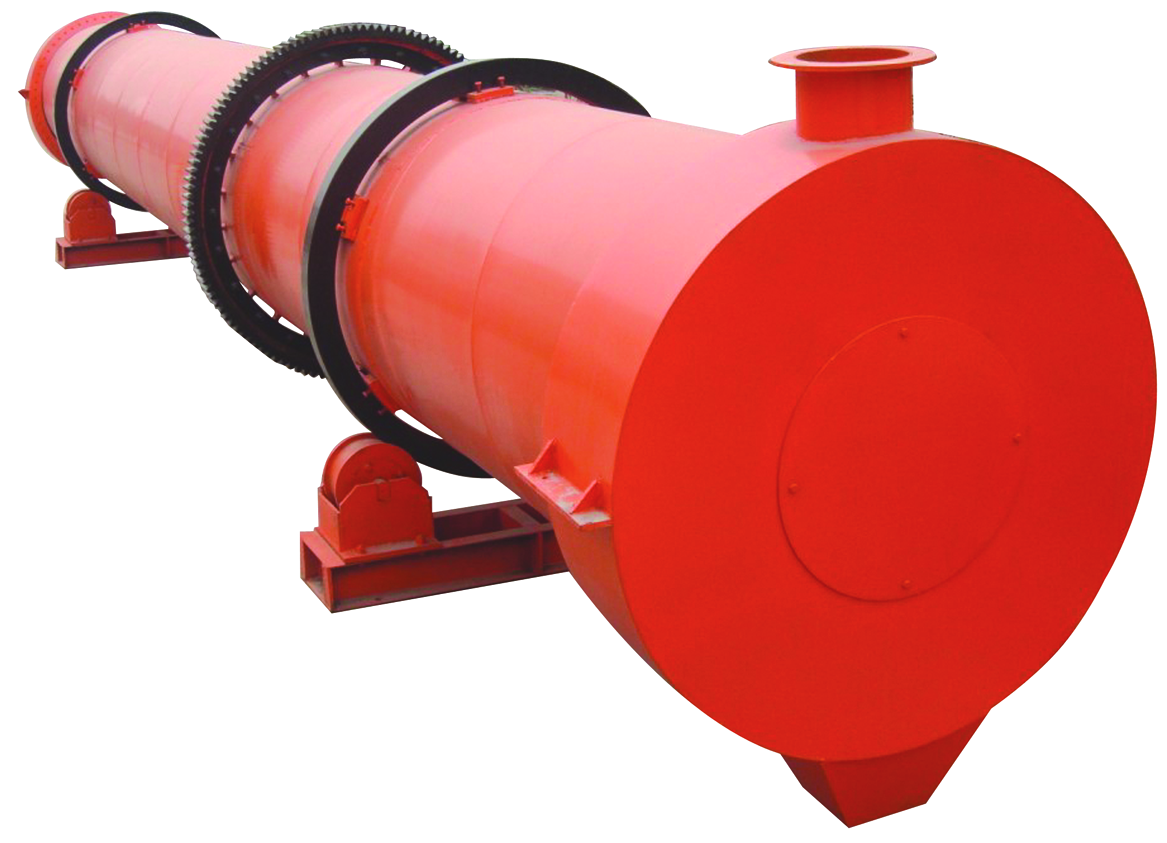
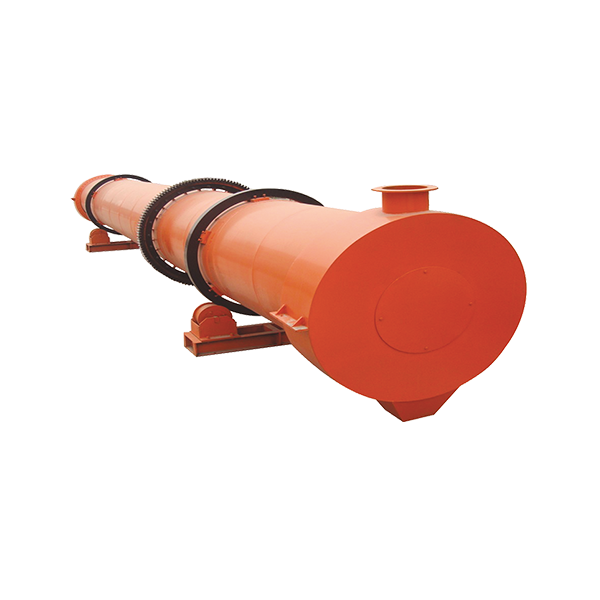
From the perspective of mechanical construction, the drying system manufactured by Zhengzhou Yizheng Heavy Machinery Equipment Co., Ltd. is a meticulously engineered heavy-duty steel structure. Its core component is a massive cylindrical rotary drum, fabricated entirely from high-strength carbon structural steel plates that comply with national industrial standards. To support this enormous structure, which may weigh dozens or even hundreds of tons, heavy-duty riding rings (tyres) manufactured through advanced forging processes are scientifically distributed around the exterior of the drum. These riding rings rest securely on support roller assemblies made from high-quality cast steel, forming a solid supporting foundation.
Regarding the drive system, a large ring gear is flange-mounted around the drum and precisely meshes with a pinion gear on the drive shaft. Driven jointly by a high-torque industrial reducer and a heavy-duty motor, the drum achieves smooth and continuous rotation. In addition, arrays of metal lifting flights designed with specific geometric angles are welded along the circumference and axial direction inside the drum. Yizheng Heavy Machinery strictly implements industrial-grade automatic submerged arc welding processes at all critical load-bearing welds and stress points, supplemented by ultrasonic nondestructive testing. This ensures that the equipment maintains excellent fatigue resistance and structural integrity even under harsh operating conditions involving long-term thermal expansion and contraction cycles and continuous mechanical friction. It is not merely dehydration equipment but also the central hub of the entire plant’s thermal engineering system.
II. Working Principle
The moisture removal process of an organic fertilizer dryer is essentially the macroscopic manifestation of forced convective heat transfer working in coordination with the physical movement of materials. Zhengzhou Yizheng Heavy Machinery’s drying production line follows rigorous principles of both engineering thermodynamics and kinematics.
The entire drying cycle begins with the continuous quantitative feeding of wet organic fertilizer granules. The material is smoothly introduced through a feed chute equipped with a dedicated sealing and air-lock mechanism into a rotating drum installed at a specific inclination angle, usually between 2% and 5%. Because the drum has an axial slope, combined with uniform low-speed circumferential rotation, the material begins to move in a spiral axial path from the higher end (feed end) toward the lower end (discharge end) under the combined effects of gravity and mechanical driving forces.
Inside the drum, densely arranged specially designed metal lifting flights play a critical role in material movement. As the drum rotates continuously, the lifting flights repeatedly scoop up wet material from the bottom, raise it to a higher position within the drum, and then allow it to fall naturally in a cascading pattern under gravity. This continuous mechanical action of “lifting and dropping” creates dense curtains of material across the drum’s cross-section, significantly increasing the exposed surface area of the particles.
Simultaneously, the thermal airflow passes through the material. Clean hot air generated by an independently configured external combustion furnace (hot-air furnace) is drawn into the drum at a calculated flow velocity under the negative pressure created by a high-capacity induced-draft fan at the end of the system. This airflow, carrying substantial thermal energy, directly penetrates the curtain of particles regardless of whether the system adopts a co-current or counter-current configuration. At the moment of direct contact between the gas and solid phases, the sensible heat of the hot air is rapidly transferred to the fertilizer granules and converted into the latent heat required for moisture evaporation.
To properly protect the beneficial microbial communities and organic matter contained in organic fertilizers from carbonization and damage, the system applies strict temperature-range control to the heat source input. The heat rapidly vaporizes free moisture on the surface of the granules, while capillary moisture inside the particles migrates toward the surface under the influence of the temperature gradient and continues to evaporate. The resulting water vapor is immediately carried away by the flowing hot air and extracted from the drum as high-humidity exhaust gas. Meanwhile, the thoroughly dehydrated, solid granules move smoothly along the axial slope to the discharge box and are transferred to the next processing stage. Through scientific calculations of lifting-flight arrangement density and hot-air velocity, Yizheng Heavy Machinery ensures that every fertilizer granule receives a balanced duration of thermal exposure inside the drum, thereby achieving highly consistent moisture removal rates throughout the entire batch of material.
III. Product Applications
Relying on its broad material adaptability and robust industrial structure, the organic fertilizer dryers manufactured by Zhengzhou Yizheng Heavy Machinery Equipment Co., Ltd. are extensively applied across multiple engineering fields involving modern ecological circular agriculture and urban solid waste resource utilization. They have become indispensable core equipment for factories seeking continuous, industrial-scale mass production of standardized granular fertilizers.
In downstream environmental protection projects within the large-scale livestock and poultry farming industry, this equipment is widely deployed to process materials such as chicken manure, cattle manure, pig manure, and sheep manure that have undergone preliminary fermentation. Even after biochemical maturation and physical extrusion forming, these livestock wastes often remain relatively soft and contain substantial amounts of moisture-absorbing colloidal substances. The dryer can steadily remove excess moisture from these sticky granules, solidify their physical structure, and transform them into commercial-grade organic fertilizers with well-formed particles and qualified compressive strength, suitable for long-distance logistics transportation and mechanized spreading.
In municipal environmental protection and industrial organic residue treatment, this thermal equipment also demonstrates excellent engineering adaptability. Typical applications include large municipal sludge treatment plants, sugar mill filter mud conversion projects, palm oil processing residue treatment, and digestate dehydration in large-scale biogas projects. When handling various material systems with complex compositions and widely differing initial moisture contents, the equipment can provide reliable technical support for large-scale solid waste reduction and resource recovery through adjustments to process parameters.
Furthermore, whether used in a dedicated production line focused exclusively on organic fertilizer processing or in an integrated organic-inorganic compound fertilizer processing facility with complex formulation systems, this thermal dehydration system demonstrates strong engineering flexibility. The technical team can configure appropriate drum volumes and auxiliary thermal units according to the plant’s planned hourly production capacity, allowing seamless integration into production lines ranging from small local cooperatives to large regional agricultural supply groups.
IV. Product Features
During the research, development, and manufacture of rotary drying systems, Zhengzhou Yizheng Heavy Machinery Equipment Co., Ltd. consistently follows rigorous process standards and durability-oriented principles in the heavy machinery manufacturing industry, giving this product a series of distinctive industrial technical features:
1. Rigid and Robust Mechanical Structure with a Long-Service-Life Foundation: Thermal processing equipment must maintain controlled deformation under the combined stresses of prolonged high-temperature exposure and heavy-load mechanical friction. The main structural beams of this equipment are fabricated by welding thickened structural steel sections conforming to national standards, while the drum and critical wear-prone areas are constructed from wear-resistant alloys with specific compositions or thickened carbon steel. The contact surfaces between the heavy-duty cast steel support rollers and riding rings undergo precision turning and heat treatment, ensuring that radial and axial runout errors during operation remain within reasonable mechanical tolerances. This heavy-duty material construction and precision machining significantly delay metal fatigue under harsh operating conditions, providing the entire production line with an extended service life.
2. Scientifically Engineered Heat and Mass Transfer System: Unlike simple heating pipelines, Yizheng Heavy Machinery employs complex fluid-dynamic arrangements for the lifting-flight arrays inside the drum. The staggered and combined lifting-flight design effectively breaks up material adhesion layers at the bottom of the drum and prevents the “wind tunnel effect,” in which hot air bypasses the material and is directly extracted without penetrating it. This ensures that the hot airflow passes through the dense material curtain, significantly increasing moisture evaporation per unit of energy consumed and achieving more effective thermal energy utilization.
3. Smooth and Continuous Heavy-Duty Transmission Assembly: The system avoids lightweight but damage-prone transmission methods and instead adopts a conventional combination of large-module forged gear sets and industrial-grade hardened gear reducers. This transmission chain provides a substantial overload capacity margin. Even under complex conditions involving a sudden increase in material accumulation inside the drum and an instantaneous rise in resistance load, it can maintain smooth power output and a constant rotational speed, ensuring the continuity of production line operations.
4. Rigorous Environmental Protection Negative-Pressure Dust Collection Network: To address the inevitable generation of fine dust and exhaust gas during thermal evaporation, the entire drying line is designed to operate under slight negative pressure. Exhaust gas drawn by the induced-draft fan is forcibly directed into a multistage environmental treatment system, such as a large cyclone dust collector combined with a wet water-scrubbing desulfurization and dust removal tower. This enclosed dust settling and purification network effectively intercepts uncontrolled particulate emissions into the plant atmosphere, ensuring that the factory’s exhaust emission indicators strictly comply with industrial environmental protection regulations.
5. Industrial Automation Integration and Adjustability: The equipment’s airflow control system and transmission system are deeply integrated into a central PLC electrical control cabinet. Operating engineers can flexibly adjust the induced-draft fan’s airflow volume and the drum’s rotational speed through variable-frequency drives according to seasonal changes in ambient humidity or fluctuations in the material’s initial moisture content, thereby achieving precise dynamic control over thermal exposure time and moisture removal intensity.
V. Product Specifications
To facilitate detailed technical evaluations by EPC contractors and factory procurement teams, the following are some basic engineering parameters of typical organic fertilizer rotary drying systems manufactured by Zhengzhou Yizheng Heavy Machinery Equipment Co., Ltd. The final specifications of individual machines must be determined through targeted engineering calculations based on the customer’s actual plant area, target production capacity, and material physical properties:
1. Production Capacity Range: The system portfolio can steadily cover small experimental production lines processing 1.0 ton per hour through to large continuous heavy-industrial production lines with throughput capacities of 20.0 tons per hour or more.
2. Core Drum Geometric Dimensions: The effective internal drum diameter ranges from 1.0 meter to 3.0 meters, while the longitudinal length extends from 10.0 meters to 30.0 meters depending on the required thermal retention time.
3. Mechanical Rotational Speed: The normal operating speed is scientifically set between 3.0 and 8.0 revolutions per minute, with variable-frequency technology used to control the axial movement speed of the material.
4. Drum Axial Installation Inclination: The engineering slope is generally set between 2.0% and 5.0%. This inclination enables natural material movement through gravity, eliminating the complicated maintenance requirements of internal conveying machinery.
5. Thermal Airflow Temperature Range: The initial temperature of the airflow entering the drum from the hot-air furnace is generally controlled within an engineering range of 200°C to 300°C, ensuring sufficient thermal energy for moisture removal while avoiding excessive carbonization of biomass.
6. Moisture Removal Engineering Specifications: The system is designed to receive wet granules with an initial moisture content of 25% to 35% and ensure that, after thermal processing, the moisture content of the finished product is consistently reduced to the commercial packaging standard of 10% to 15%.
7. Core Drive Power Requirements: Depending on the substantial self-weight and operating torque requirements of the equipment, the main drive motor power ranges from 11.0 kW to 110.0 kW or higher, depending on the model.
Within the extensive production process of a complete organic fertilizer manufacturing plant, the organic fertilizer dryer is not merely an individual machine but a critical engineering component that determines the physical strength, storage stability, and end-market competitiveness of the finished fertilizer. The continuous and uniform removal of free moisture provides the physical foundation for fertilizer granules to maintain good structural integrity during subsequent quantitative weighing and packaging, long-distance logistics transportation, and mechanized agricultural spreading. Zhengzhou Yizheng Heavy Machinery Equipment Co., Ltd. consistently adheres to the rigorous manufacturing philosophy of the heavy industry sector, deeply integrating robust materials science, precision mechanical processing, and complex fluid thermodynamics. The company is committed to providing domestic and international investors and factory operators with durable, continuously operating heavy-duty thermal processing systems. When evaluating and selecting core factory equipment, choosing drying equipment supported by extensive mechanical manufacturing expertise and reliable engineering performance represents a sound approach for factories seeking to control long-term maintenance costs, maintain production line continuity, and consistently deliver standardized, high-quality fertilizers to the agricultural market.
For more inquiries or more information, please contact:
Sales Department / Tina Tian
+86 – 15538237222
Zhengzhou Yizheng Heavy Machinery Equipment Co., Ltd
Email: tianyaqiong@yz-mac.cn
Website: www.yz-mac.com
Post time: Nov-13-2026